Get a Quote
Our story · history

17+ years of keeping cardboard in play.

A single warehouse, a forklift, and a conviction that used boxes were worth saving. Here is how that grew into a nationwide, landfill-free reuse network.

Free · No obligation

Become part of the next chapter

Buying, selling or reporting on diversion — tell us what you need and we reply by email, fast.

  • ♻ Landfill-free
  • 48-hr quotes
  • Nationwide freight
US ZIP or Canadian postal code.
US or Canada format, e.g. (801) 555-0142.

Fields marked * are required. We reply by email — this company keeps no phone line, so please double-check your address. We never sell your data.

Answer first

USA Boxes Recycle was founded in 2009 in the Salt Lake Valley, Utah. It began as a single warehouse buying and reselling used boxes and has grown, over more than 17 years, into a nationwide reuse network — with a dedicated Gaylord reconditioning line, a freight and backhaul program, an upcycled goods line, and more than two million boxes diverted from landfill.

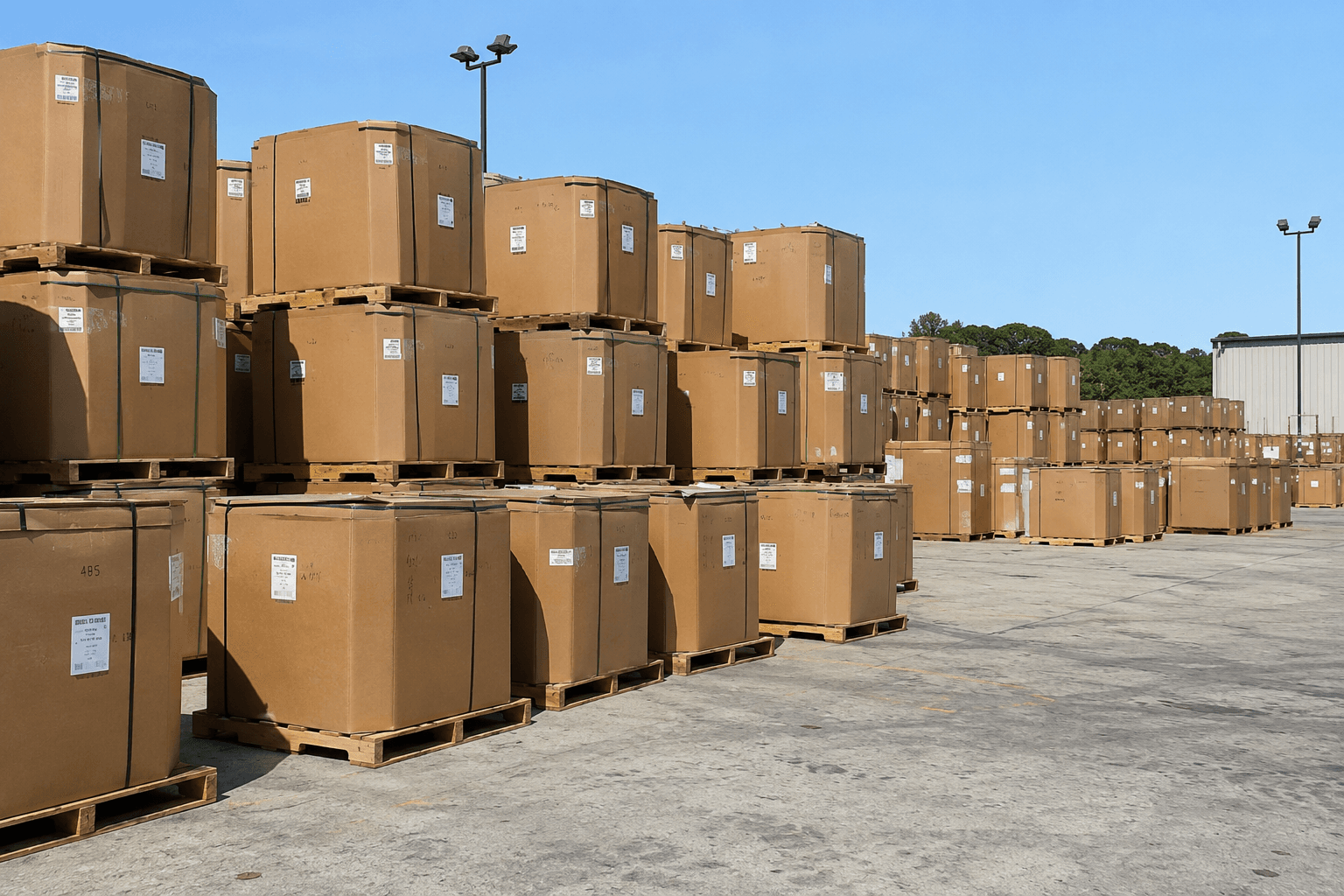
Octagonal bulk bins arranged in the outdoor yard, ready to be graded and shipped for a second lifeThe yardWhere the story got room to grow: the outdoor bin yard opened in 2010.
From one warehouse to a yard

Growth measured in bins, not billboards.

Every milestone below is really a story about capacity: more room to say yes to surplus, more grading hands, more freight lanes to send graded boxes somewhere useful. The company grew the way a reuse network should — by finding a next life for more material, not by manufacturing more of it.

The yard you see here is where that scale became visible: whole trailer-loads of bulk bins, graded and staged, each one waiting for a second job instead of a landfill.

Year by year

The milestones that built a circular supply chain.

2009

Founded in the Salt Lake Valley

We opened a single warehouse in the Salt Lake Valley with a forklift, a few thousand square feet, and a stubborn idea: the used boxes local warehouses were paying to throw away were worth buying, grading and reselling. Word travelled fast among distribution centers tired of dumpster fees.

2010

The octagon yard opens

Indoor space filled fast, so we opened an outdoor yard for octagonal bulk bins and larger Gaylord inventory. It let us take whole trailer-loads of surplus at once instead of turning good material away — the first time capacity, not conviction, set the ceiling.

2011

The first Gaylord reconditioning line

Demand for bulk bins outpaced supply, so we built our first dedicated Gaylord reconditioning line — trimming, re-taping, re-flapping and grading used bulk containers into A, B and C tiers. It turned a trickle of salvage into a repeatable, gradeable product.

2013

Grading discipline becomes the standard

We codified our A/B/C grading system in writing so a buyer in Denver could order the exact same "Grade B, double-wall" bin as a buyer down the street. Consistency, not just price, became the reason customers stayed.

2014

ISPM-15 pallets and export-ready packaging

Customers shipping overseas needed heat-treated, ISPM-15 stamped pallets so a reuse-first choice would not stall at customs. We added compliant pallet supply and phytosanitary documentation, making circular packaging viable for international freight.

2015

Freight & backhaul network launches

Empty trucks are a tragedy of both cost and carbon. We launched a freight and backhaul program that filled return legs with used boxes on their way to a second home — cutting price for customers and emissions for the planet in the same move.

2017

One million boxes diverted

We crossed our first million boxes kept out of landfill. It was the moment reuse-first stopped being a promise and became a documented, cumulative number we could stand behind.

2018

Nationwide LTL and truckload lanes

What began as regional pickups grew into consolidated less-than-truckload and full truckload lanes reaching coast to coast. A grower in California and a distributor in the Carolinas could now buy the same graded bins from a single Utah yard.

2019

The upcycled goods line

Not every box can ship again, and we refuse to send board to a landfill. So we started converting genuinely spent corrugated into upcycled dunnage, void fill and protective goods — plastic-free, made from material that would otherwise be pulped or buried.

2020

Keeping supply chains stocked through the crunch

When new-box lead times stretched and mills backed up, reused inventory became a lifeline. We kept warehouses, food producers and essential shippers supplied with graded boxes and Gaylords when new stock simply was not available — proof that reuse is resilience, not just virtue.

2021

Diversion reporting for ESG teams

Sustainability officers began asking for proof. We formalized diversion reporting — tonnage reused versus recycled, per account — so our customers could put real, auditable numbers into their own ESG disclosures.

2022

The upcycled goods marketplace

We expanded the upcycled line into a proper product catalog — dunnage, void fill and protective goods buyers could order directly, closing the loop on material that would once have been pulped and turning a cost center into a second revenue stream.

2023

Two million boxes diverted

We passed two million boxes diverted from landfill, with the majority resold with zero rework. Nationwide LTL and truckload lanes now reach customers coast to coast from our North Salt Lake base.

2025

A rebuilt, reuse-first digital home

We rebuilt the website around the way the business actually works: a browsable catalog of graded boxes and Gaylords, deep size and wall-type references, a living impact page, and reply-by-email quoting. The goal was to make the circular choice the easy click, not the hard one.

2026

17+ years, still landfill-free

More than fifteen years in, the scoreboard still reads the same in the only place that matters: zero boxes sent to landfill. We keep grading, reconditioning and hauling — because the most sustainable box is the one already made.

Where the story goes from here

Every year the reuse-first idea gets a little less radical and a little more obvious. Our job is to keep proving that circular packaging is not just the responsible choice — it is the smarter, cheaper, more reliable one. The next chapters look like tighter freight lanes, deeper diversion reporting, and even more of every box kept in service.

The through-line
  • Reuse-first from the very first load in 2009.
  • Grading discipline that made used boxes a dependable product.
  • Freight built to cut both cost and carbon.
  • Zero boxes to landfill — every single year.
Company History — From One Warehouse to a National Reuse Network · USA Boxes Recycle